
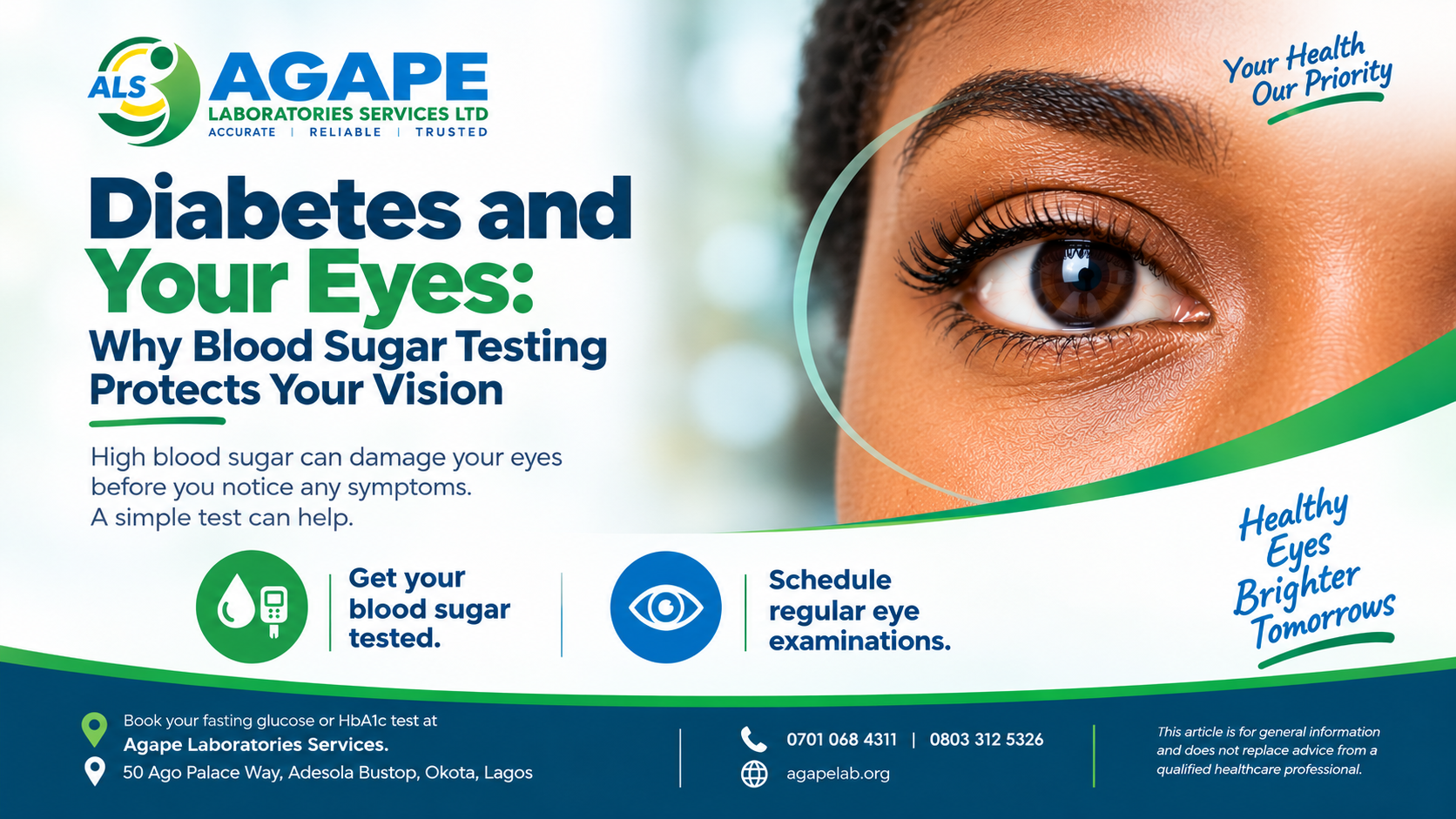
Most people think of diabetes as a problem of the blood. But some of its earliest and most serious damage happens quietly, in the eyes. Many people only discover this when their vision has already started to fade.
The good news is that much of this damage can be slowed or prevented. It starts with knowing your blood sugar and with a simple test.
How high blood sugar harms your eyes
The back of your eye, called the retina, is lined with tiny, delicate blood vessels. When blood sugar stays high for a long time, these vessels can weaken, leak or become blocked. This condition is called diabetic retinopathy, and it is one of the leading causes of vision loss in adults with diabetes.
Diabetes can also affect your eyes in other ways:
- Macular swelling: fluid can build up in the centre of the retina and blur your sharpest vision
- Cataracts: the lens of the eye can become cloudy earlier than expected
- Glaucoma: pressure inside the eye can rise and damage the optic nerve
- Fluctuating vision: changes in blood sugar can temporarily blur your vision from day to day
The danger is that it is silent.
In the early stages, diabetic eye damage often causes no symptoms at all. You can see well, feel fine and still have changes developing in the retina. By the time vision problems are obvious, some damage may already be permanent. This is why testing and regular eye checks matter more than waiting for symptoms.
Warning signs to take seriously
- blurred or cloudy vision that comes and goes
- dark spots, strings or “floaters” drifting across your sight
- difficulty seeing at night
- colours that look faded or washed out
- a dark patch or shadow in the middle of your vision
If you notice sudden loss of vision, a shower of new floaters, flashes of light, or a dark curtain across your sight, see a doctor or eye specialist immediately. Do not wait for an appointment next week.
The blood sugar tests that matter
Two tests are used most often to check blood sugar, and each tells your doctor something different.
- Fasting blood glucose: Measures your blood sugar after a period without food, usually at least 8 hours. It shows where your sugar stands at that moment. Follow your laboratory’s preparation instructions carefully.
- HbA1c: Shows your average blood sugar over the past two to three months. It gives a bigger picture than a single reading and is also used to see how well diabetes is being controlled. Ask the laboratory whether you need to fast for it.
Your doctor may sometimes add other tests, such as a glucose tolerance test, depending on your situation.
A blood test is not an eye test.
It is important to understand what each check can and cannot do. A blood sugar test tells you whether your sugar is high. It cannot tell you whether your eyes have been damaged. Only an eye examination, often with the pupils dilated, can show what is happening in the retina.
So you need both: blood tests to catch and control high sugar early and regular eye exams to check the eyes themselves. If you already have diabetes, an eye examination is usually advised at least once a year, or as often as your eye specialist recommends.
Who should get tested?
Ask your doctor about a blood sugar test if you:
- have a parent, brother or sister with diabetes
- are overweight or have a large waistline
- have high blood pressure or high cholesterol
- are not physically active
- had diabetes in pregnancy
- are experiencing frequent thirst, frequent urination, tiredness or blurred vision
Many people with high blood sugar have no symptoms, so a normal-feeling body is not proof of a normal result.
Everyday habits that protect your vision
- Keep your blood sugar within the range your doctor sets for you.
- Take any prescribed medication as directed, even when you feel well.
- Control your blood pressure and cholesterol, since both affect the blood vessels in the eye.
- Do not smoke.
- Eat balanced meals, stay active and maintain a healthy weight.
- Never skip your eye examination, even when your vision seems fine.
Take the first step.
Protecting your sight does not begin at the eye clinic. It begins with knowing your numbers. A simple blood sugar test can show a problem years before it affects your vision, while there is still time to act.
At Agape Laboratories Services, we are here to support you and your doctor with accurate, reliable testing. To book a fasting glucose or HbA1c test, visit us at 50 Ago Palace Way, Adesola Bustop, Okota, Lagos, or call 0701 068 4311 or 0803 312 5326, or visit agapelab.org.
This article is for general information and does not replace advice from a qualified healthcare professional.